Get in touch
I'm always excited to take on new projects and collaborate with innovative minds.
Phone
Website
Address
Dhaka, bangladesh
I'm always excited to take on new projects and collaborate with innovative minds.
Dhaka, bangladesh
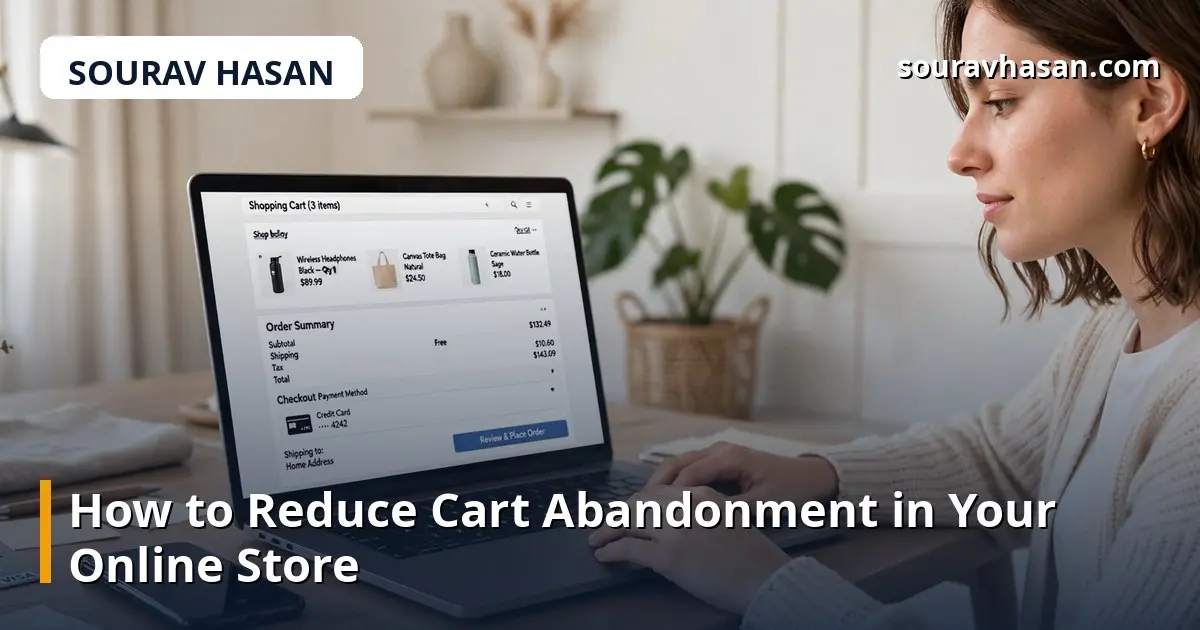
Most people who add a product to their cart never buy it. For an online store owner, that is the most frustrating number in the business, because these are not casual visitors: they were close to buying. The good news is that cart abandonment is usually fixable.
This guide explains why shoppers abandon carts and the practical steps I recommend to store owners to bring more of them back, based on running an e-commerce store and working with online sellers in Bangladesh.
Before fixing anything, understand the common reasons. In my experience the same few causes come up again and again:
The first five are problems you can fix. The last one is normal behaviour — your job is to make it easy for those shoppers to come back later.
Surprise charges are the single biggest reason carts are abandoned. If delivery costs extra, say so on the product page or in the cart, not at the final step. In Bangladesh, where many stores use cash on delivery, shoppers also want to know the delivery charge for their area before they commit. A simple delivery-charge note on the product page, or a charge calculator in the cart, removes the surprise and keeps the shopper moving.
The same applies to any other cost: taxes, installation charges, or extra fees for a particular payment method. If it is part of the price, show it before the shopper reaches the payment step.
Every extra field and every extra step in checkout costs you orders. Keep the process to as few steps as you can, and only ask for information you actually need to deliver the order: name, phone number, address, and payment choice. That is usually enough.
Three changes make the biggest difference:
Let people buy without creating an account. You can offer account creation after the order is placed, when the shopper is already happy. Forcing registration first is one of the fastest ways to lose a sale.
Most shoppers in Bangladesh browse and buy on a phone. Test your checkout on a real phone, on mobile data, not just on a desktop. Buttons must be big enough to tap, forms must not zoom awkwardly, and the page must load quickly.
If checkout has more than one step, show the shopper where they are — cart, details, payment, done — so they know how much is left. Uncertainty makes people leave.
Checkout is the moment a shopper decides whether to trust you with their money and their address. Small trust signals make a real difference here: a visible phone number they can call, a clear return and replacement policy, delivery-time information, and secure-payment badges where they apply. Genuine customer reviews on the product page also help, because they answer the question every shopper asks silently: has anyone else bought this and been happy?
For cash-on-delivery orders, trust matters just as much. State clearly that payment is made on delivery and that the customer can check the product when it arrives, if that is your policy.
A shopper who reaches the payment step and cannot find their preferred method will often leave rather than use an unfamiliar one. In Bangladesh that usually means cash on delivery plus the mobile payment options people already use every day, alongside cards for those who prefer them. Cover the common methods, keep the payment page simple, and test it regularly — a payment page that fails silently is one of the most expensive bugs a store can have.
Even a good checkout will lose some carts, and those are worth recovering. If a shopper created an account or left contact details, a polite reminder can bring them back:
For stores that take orders over the phone or WhatsApp, a short personal message works well too.
You cannot improve what you do not measure. If your store platform shows where shoppers drop off in the checkout — for example, many reach the cart but few reach payment — start there. Fix the biggest leak first, then move to the next.
If you run your store on OpenCart, my guide to managing an OpenCart store day to day covers the daily routines that keep orders, stock and customers running smoothly — the foundation that makes checkout fixes stick. And remember that the product page itself starts the sale: product descriptions that rank and sell are what get shoppers into the cart in the first place.
Rates vary by industry and by country, but it is normal for a large share of carts to be abandoned. Focus on improving your own rate over time rather than chasing a universal number.
It can, but use it sparingly. If every abandoned cart gets a discount, shoppers learn to abandon carts on purpose. Try a helpful reminder first and reserve discounts for high-value carts.
In Bangladesh, yes, for many shoppers — it removes the fear of paying before receiving the product. It does bring its own risk of refused deliveries, so pair it with order confirmation calls for high-value items.
As few as possible. One page for delivery details and payment choice, followed by a confirmation, is ideal for most small stores.
Cart abandonment feels like a big problem, but it is usually a collection of small ones: a hidden delivery charge, a forced registration, a form that is too long, a missing payment method. Fix them one at a time, measure the result, and recover the carts that still slip away with a polite reminder.
Your email address will not be published. Required fields are marked *