Get in touch
I'm always excited to take on new projects and collaborate with innovative minds.
Phone
Website
Address
Dhaka, bangladesh
I'm always excited to take on new projects and collaborate with innovative minds.
Dhaka, bangladesh
Cash on delivery brings orders in Bangladesh, but returns and fake orders eat profits. Learn practical ways to confirm orders, cut returns and protect your margins.
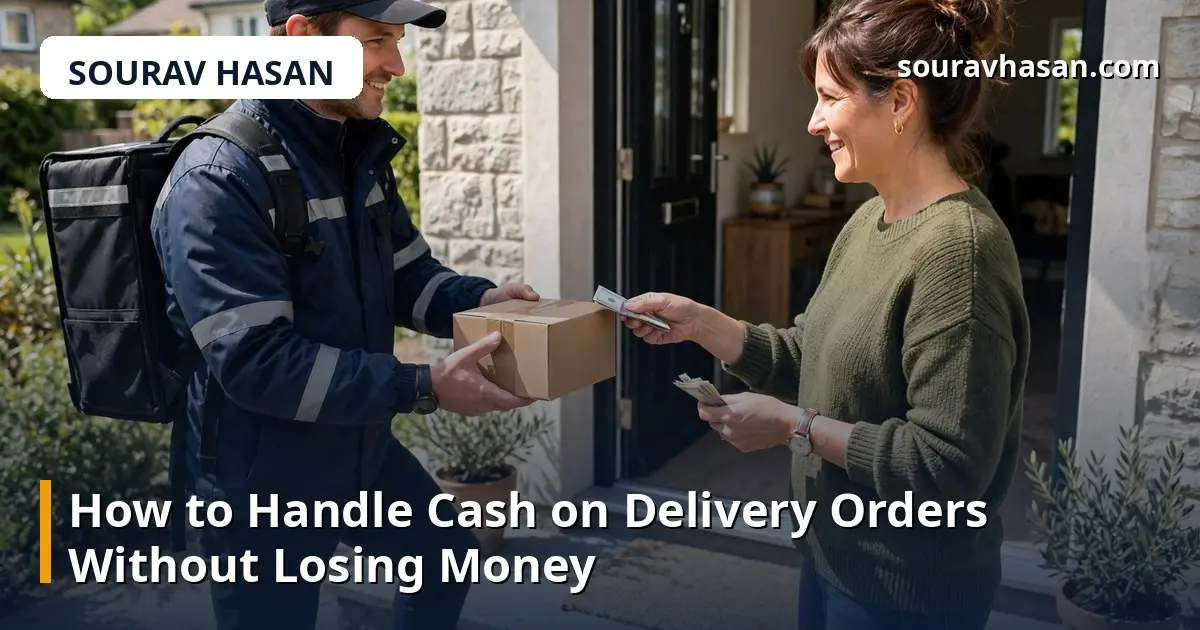
Cash on delivery, or COD, is the payment method most online shoppers in Bangladesh prefer. For a new store it brings orders that would never come if you asked for advance payment. But COD has a cost that many new sellers discover too late: customers who never pick up the phone, orders that come back undelivered, and delivery charges you pay both ways.
Running my own online store, Synex Technologies, I have learned that COD is not a problem to avoid — it is a process to manage. With a few simple habits, you can keep the orders coming while cutting the losses that make COD painful.
Most failed COD orders fall into a few patterns. Understanding them is the first step to preventing them.
Some customers place an order casually and change their mind within an hour. Others order from two or three stores at once and buy from whichever delivers first.
A missing house number, a wrong district or a phone number with a digit wrong is enough to send a parcel back. This is the most common cause of failed deliveries, and it is also the most preventable.
If the courier cannot reach the customer on the day of delivery, the parcel waits, then returns. Sometimes the customer is travelling; sometimes the number was never theirs.
When a parcel returns, you usually pay the delivery charge both ways. A few returns a week can quietly erase the profit on many successful orders.
The single most effective habit is a confirmation call or message before dispatch. It takes a minute, and it filters out most problem orders.
You do not need to abandon COD entirely to protect yourself. Many Bangladeshi stores now take the delivery charge in advance — often through bKash or Nagad — and keep the product price on delivery. This filters out casual orders and means a returned parcel does not cost you the delivery fee.
Apply this selectively if you are worried about losing customers: use it for first-time customers, for orders above a certain value, or for deliveries outside Dhaka. Regular customers who have accepted orders before can stay on full COD.
A basic spreadsheet is enough. Record the phone numbers of customers who repeatedly refuse parcels or cannot be reached, and check new orders against it. For repeat offenders, ask for advance payment or decline the order politely. This is not about punishing people — it is about protecting a small business from the same loss happening again and again.
The same record helps you spot your good customers. People who accept every order are worth a thank-you message or a small discount on their next purchase.
Your courier partner is part of the COD process. A few practices make their job easier and your returns fewer:
Many disputes come from expectations that were never stated. Put your policy where customers can see it before they order: delivery charges for Dhaka and outside Dhaka, how long delivery takes, and what happens if a parcel is refused. Keep the language simple and friendly — the goal is clarity, not legal wording.
If you already have a returns process, make sure it matches your COD policy. Our guide on handling returns and refunds in your online store covers that side in detail. And if customers are abandoning their carts before they even reach the COD option, our guide to reducing cart abandonment may help.
Yes, in most cases. In Bangladesh, refusing COD will cost you far more orders than the returns will cost you. Offer it, but manage it with confirmation calls and a clear policy.
Charge the actual courier cost for the area — commonly a lower rate inside Dhaka and a higher rate outside. Be transparent about the charge before the customer confirms the order.
Contact them once to understand why. If the product was damaged or wrong, fix the problem. If they simply changed their mind, record it and move on — and consider asking for a delivery-charge advance from that number next time.
Yes. A store is not obliged to ship every order. If an address is incomplete, the customer cannot be reached, or the number has a history of refused parcels, you can politely decline or ask for advance payment.
Cash on delivery is how most Bangladeshi customers prefer to buy online, and that is unlikely to change soon. The stores that make it work are not the ones with the fewest COD orders — they are the ones with the best process: confirm before shipping, verify the address, take a small advance where the risk is highest, and keep a record of what goes wrong. Do that consistently, and COD becomes what it should be — a way to win customers, not a way to lose money.
Your email address will not be published. Required fields are marked *